Building history
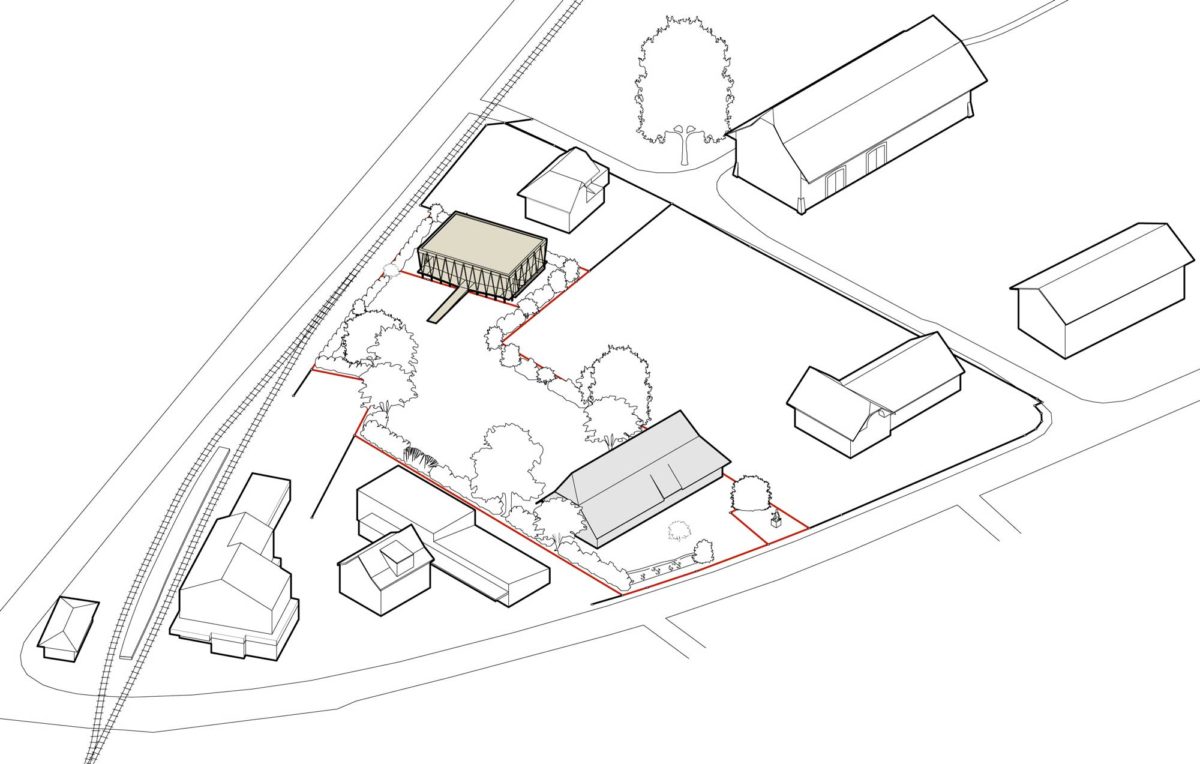
The Centre Albert Anker is situated in the immediate vicinity of the Ins Dorf station on the Aare Seeland Mobil Bahn line, in the heart of the Seeland municipality of Ins. The site is bordered by the two main transport routes to Biel and Bern. Although located at the heart of the transport hub of the municipality of Ins, the Albert Anker House and its garden have remained a small microcosm. Thanks to the surrounding green belt, the garden exudes an idyllic atmosphere with birdsong and cultural-historical features.
The new art pavilion on the north-eastern corner of the garden relieves the historic Anker House of the burden of safely storing art and cultural artefacts. With its contemporary architectural style, a multi-layered dialogue between tradition and innovation emerges between the historic building and the new structure.
The Biel-based architect Marcel Hegg was responsible for the architecture of the new building as well as for the conversion and renovation of the Albert Anker House. ATELIER MARCEL HEGG
Building site management of the new building: akkurat Bauatelier AG, Thun
Wooden structure for the new building: Truberholz AG
Wooden structure for the modifications/renovation: Zimmerei Hirschi AG

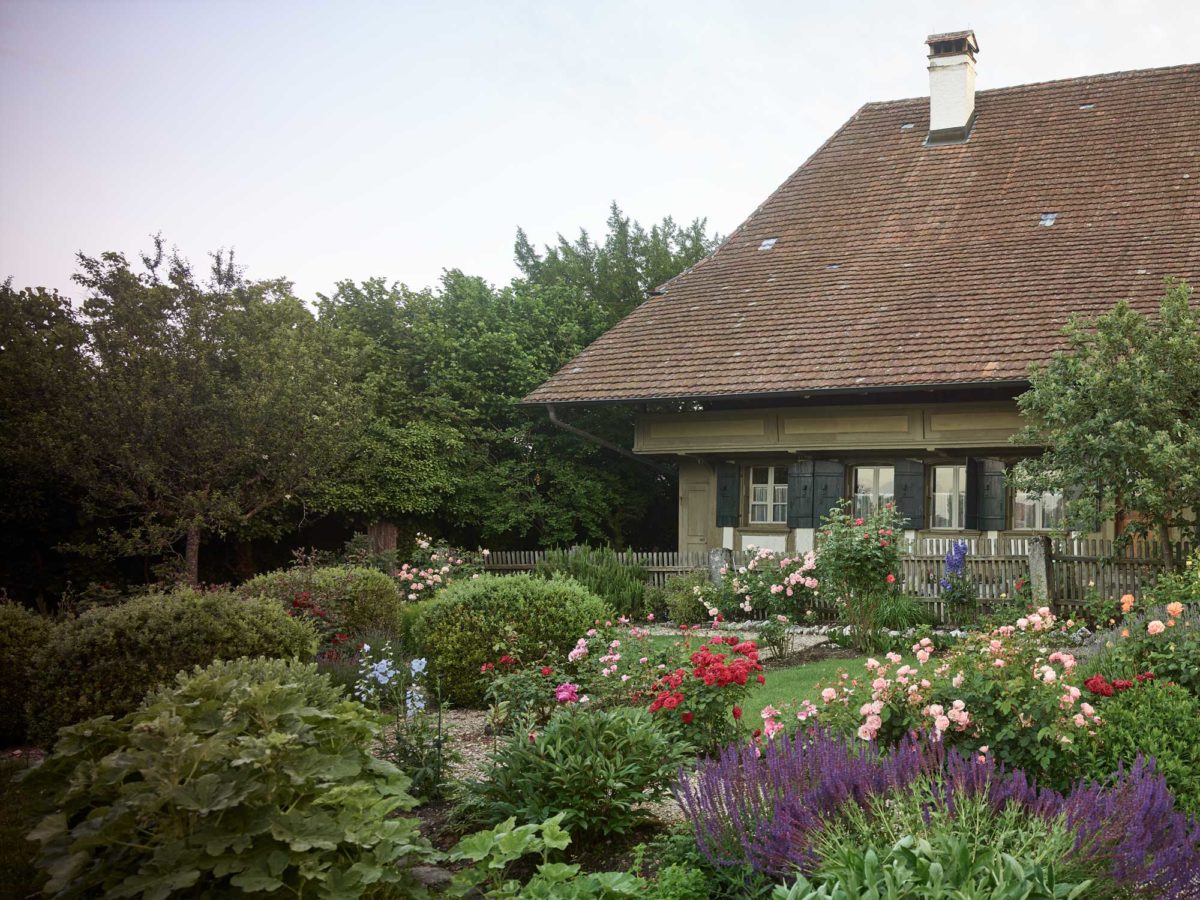
The Albert Anker House was built in 1803 by his grandfather, Rudolf Anker. Rudolf was a respected veterinary surgeon and built his own home in the style typical of Seeland farmhouses of the time, complete with stables that could be used to care for sick animals. The steep roof was designed to be thatched, but thanks to Anker’s comfortable financial situation, it was instead covered with plain tiles, making it one of the first tiled residential buildings in Ins. The Albert Anker House has been a listed building since 1977.
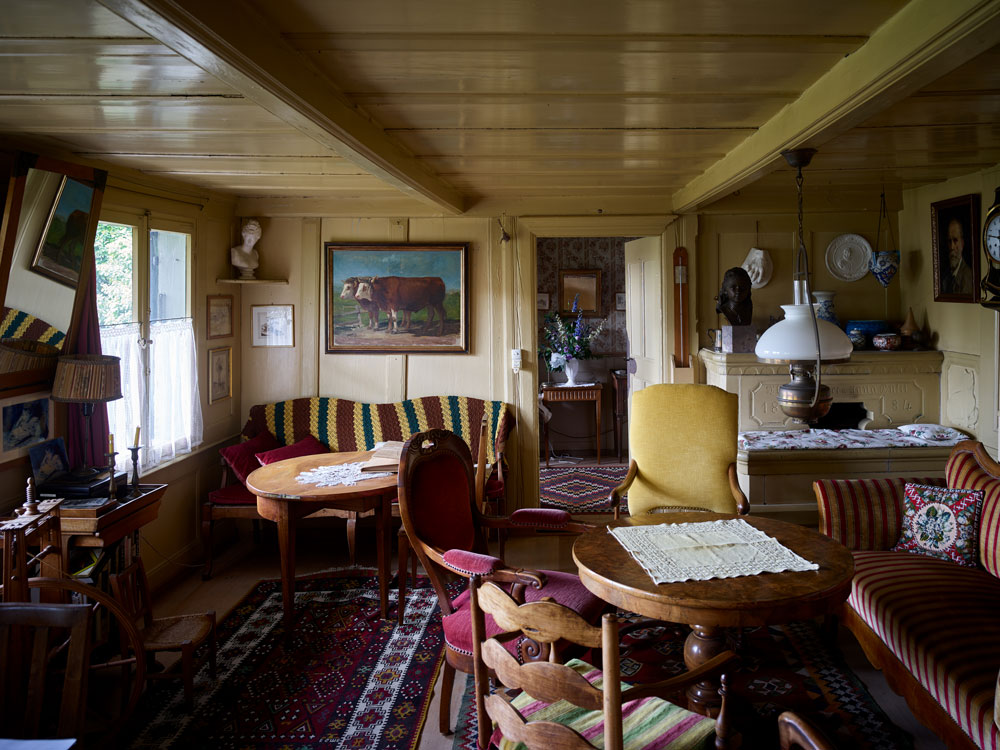
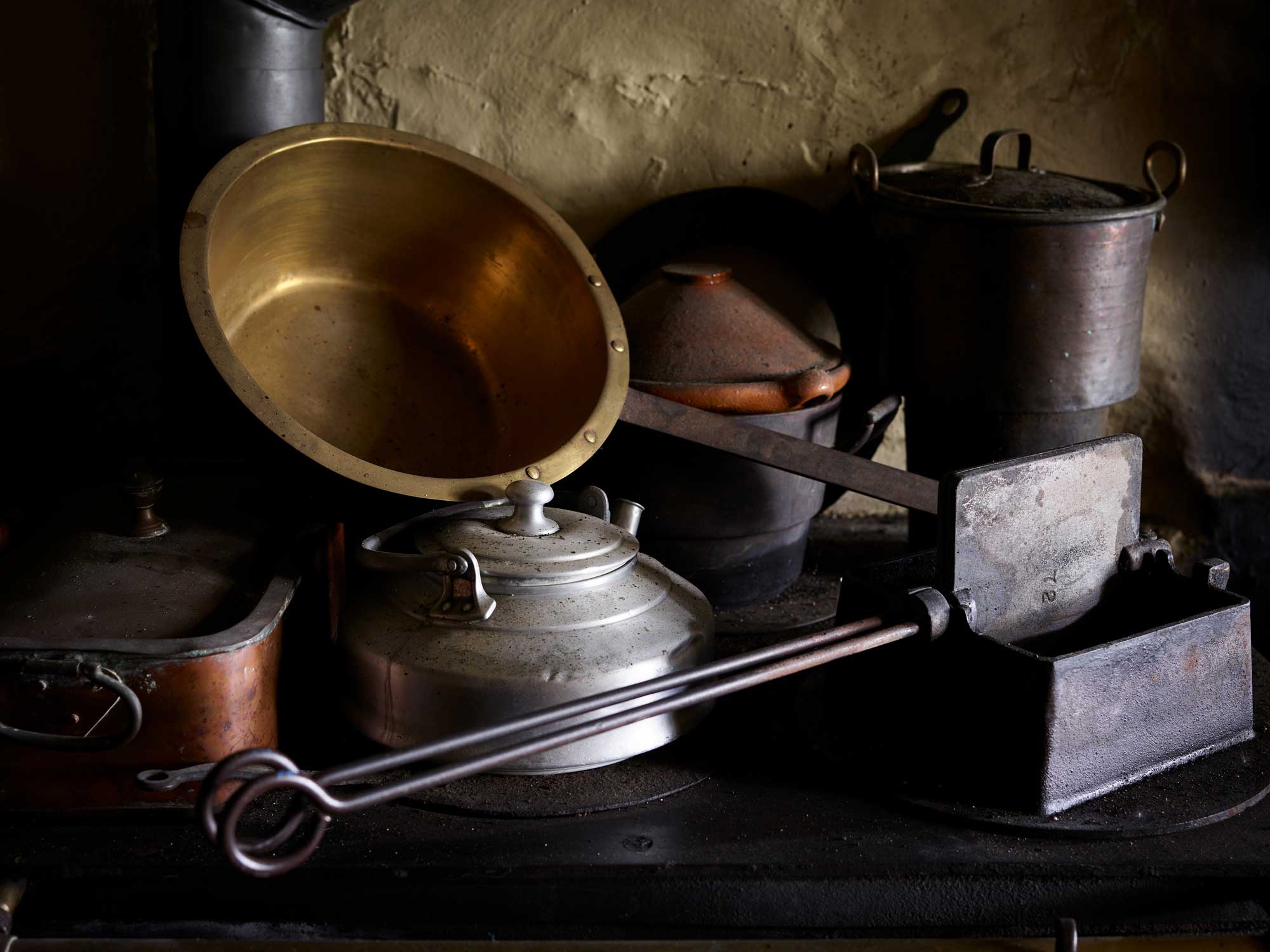
Today, the Albert Anker House is a cultural and historical highlight. The historic apartment and the artist’s studio are unique testimonies to the 19th century. In addition to the architecture and furnishings, numerous objects from days gone by have been preserved, offering an unparalleled journey through time. The lovingly furnished rooms bear witness to the middle-class domestic culture of the time and convey the art of Albert Anker. The undisputed gem is located in the attic: Albert Anker’s studio. Anker’s workspace is full of stories, memories, inspirations, artefacts and much more. His spirit is still palpable there.


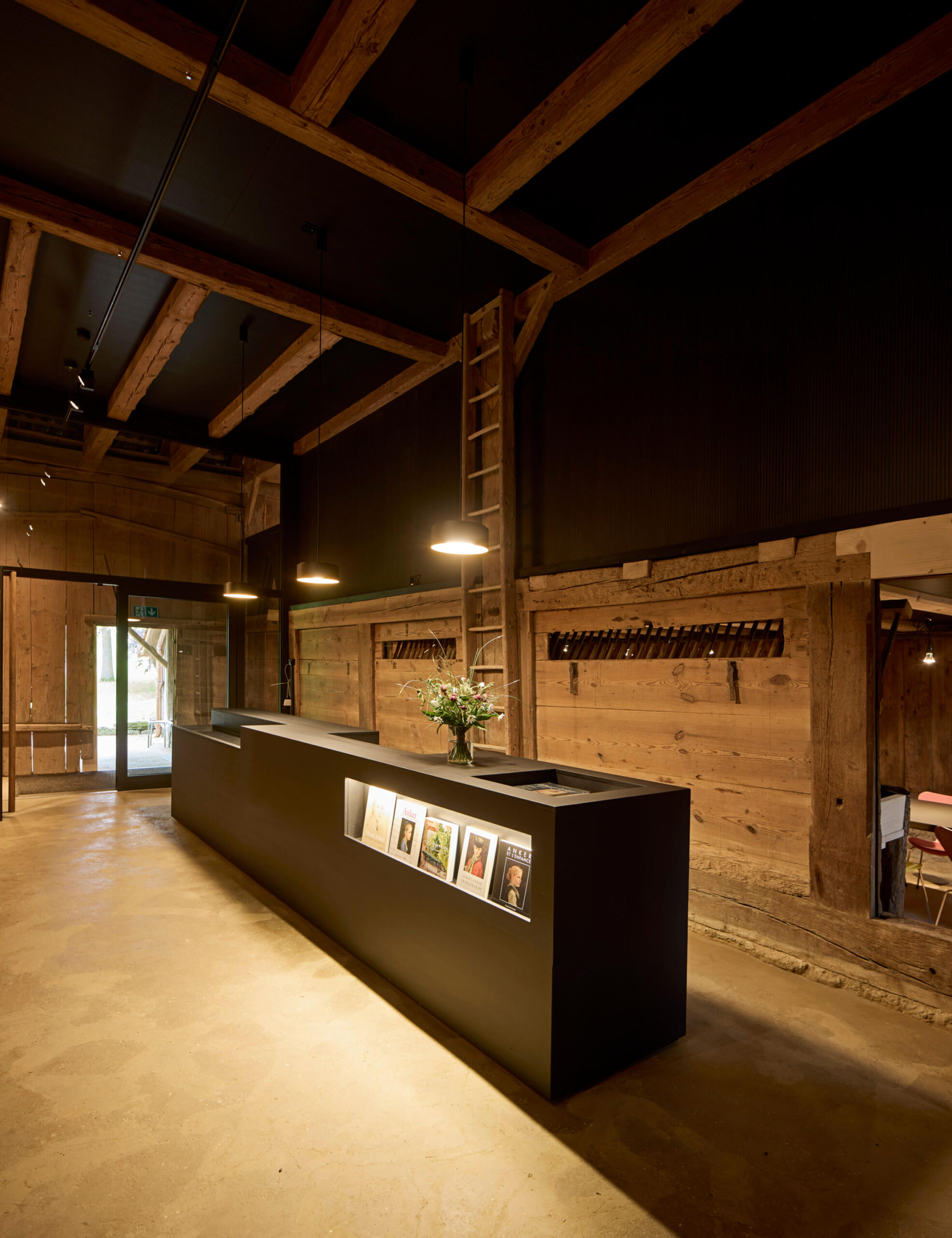
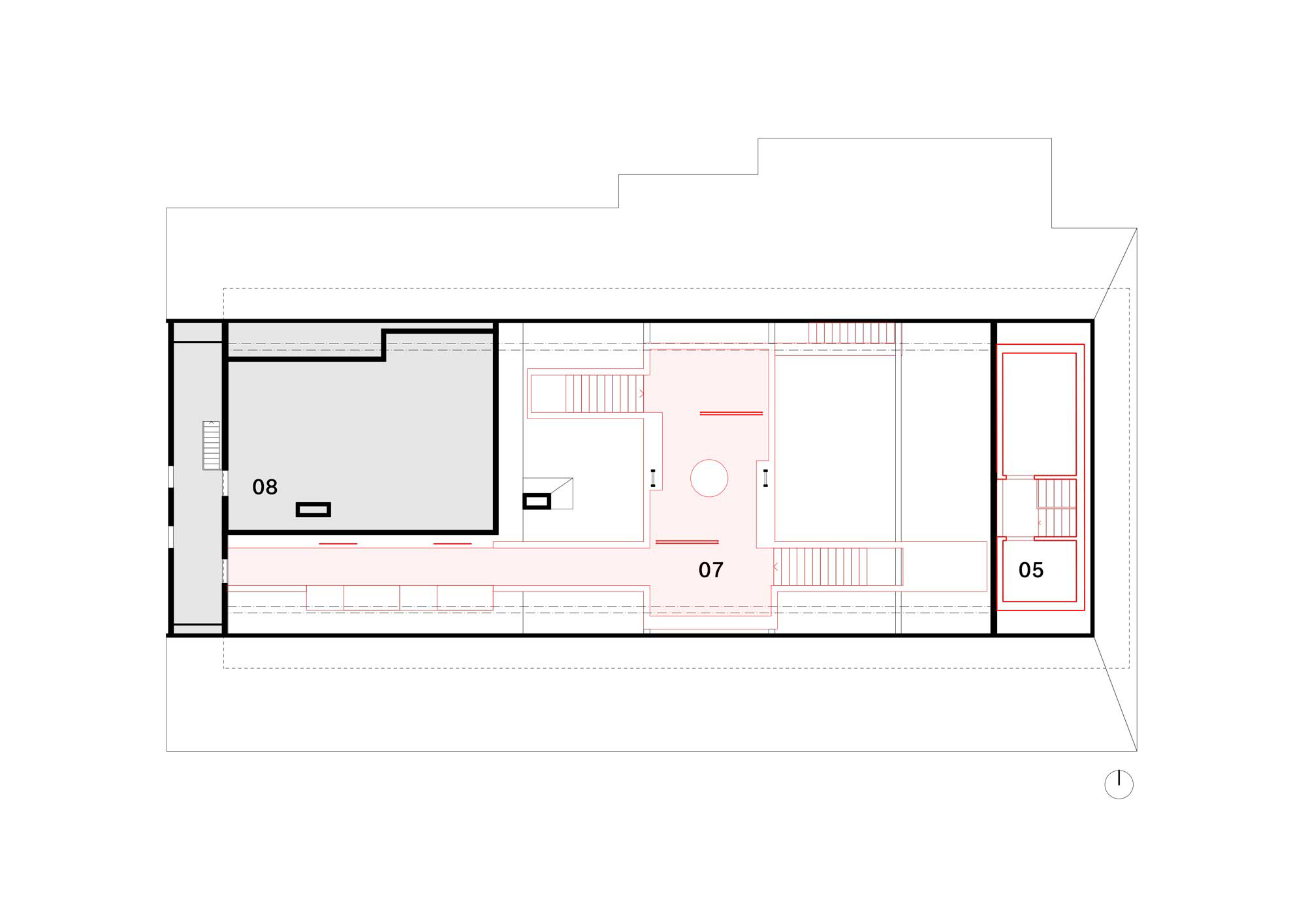
Installation of the reception area and the permanent exhibition 2023 – 2024
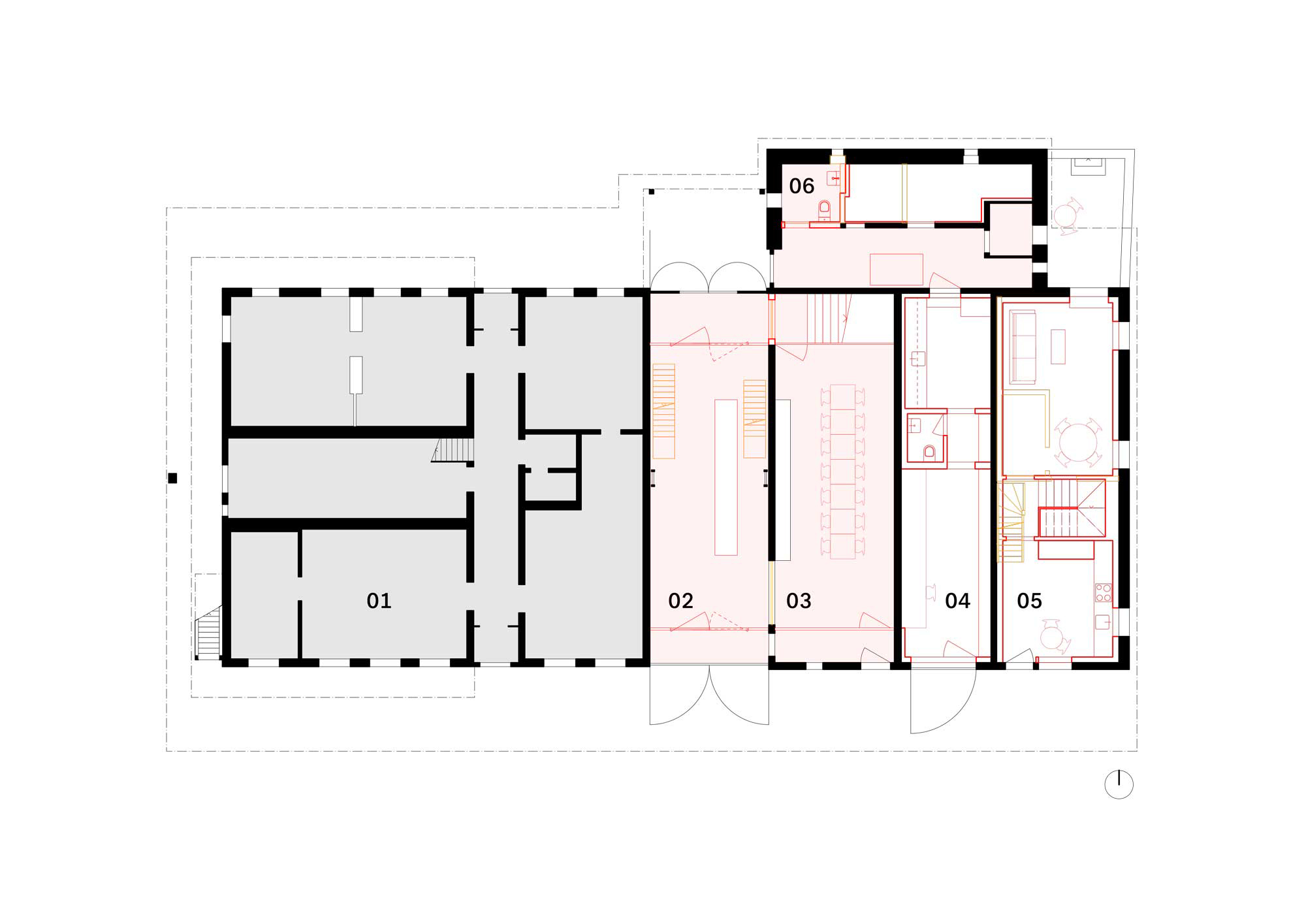
To ensure that this unique complex could be opened to a wider public, the disused rooms were repurposed and access improved. The new rooms and facilities were incorporated whilst ensuring that the historic fabric was treated with the respect due to a listed building. Where necessary, the existing fabric was repaired and restored using the same traditional craftsmanship as in the past. As a result, floors remain sloping, thresholds mark the transition from one room to another, and visitors must duck their heads in some places. The new exhibition structures intertwine and interact with the historic structures and have been deliberately incorporated as clear, modern elements to facilitate a dialogue between the different eras.
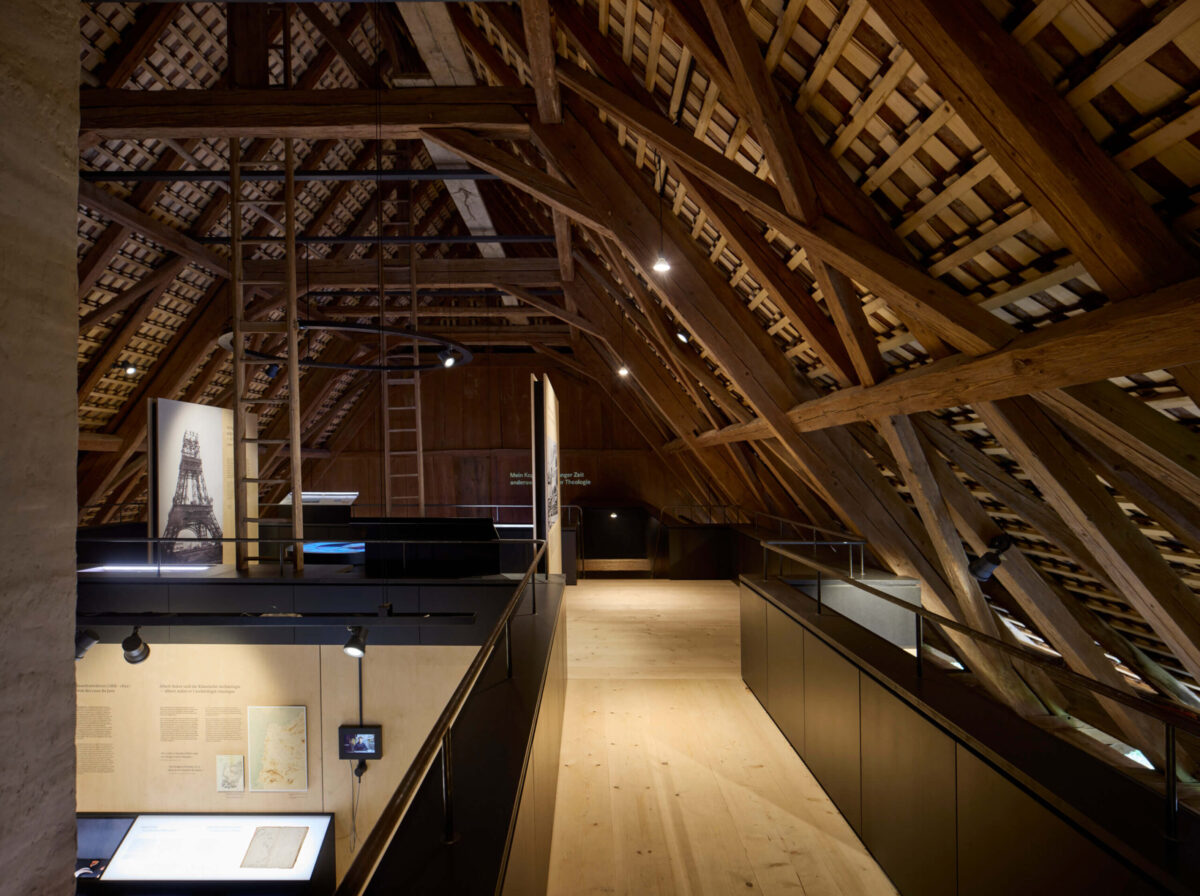
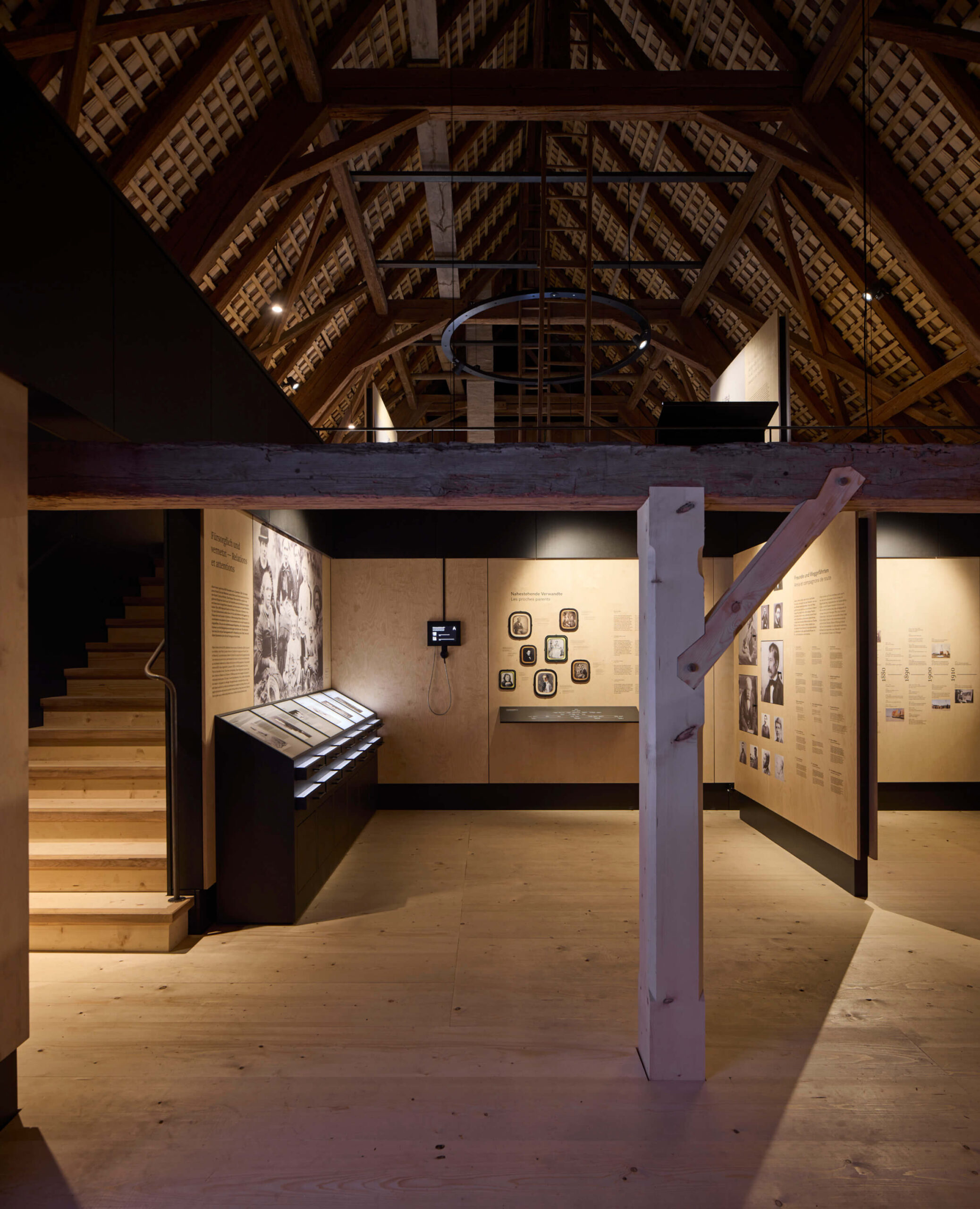
The Tenn is the new heart of the Centre Albert Anker, serving as a reception and information area. This is where the journey through the various exhibition spaces begins. The adjacent former stable is now used as a workshop space and can also serve as a bistro in inclement weather. The permanent exhibition on the life of Albert Anker spans the various exhibition spaces within the imposing attic. The various niches and levels create a unique spatial experience through the interplay between contemporary interpretative elements and the historic building structure. The exhibition also provides new access to the historic studio.
Permanent exhibition in the hayloft
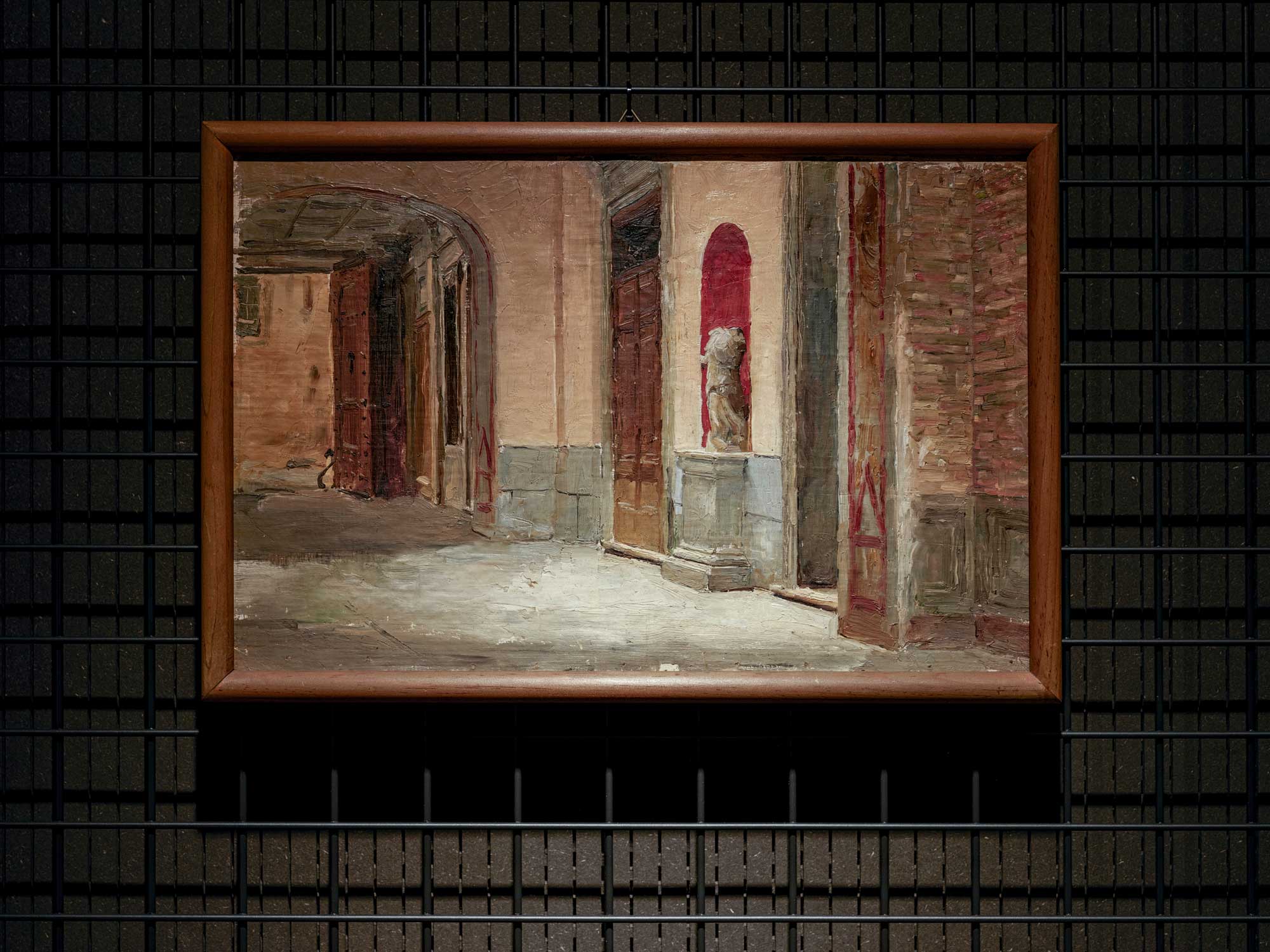
The exhibition spaces are modelled on Albert Anker’s characteristic painting style. His subjects were often depicted against a dark background to draw attention to the essentials. For this reason, the new fixtures have been designed as dark, sharply defined spatial elements that stand out clearly from the existing structure whilst remaining unobtrusive. The printed birch plywood panels take centre stage and convey information about Anker’s life and the historical context. The static information is complemented by interactive and digital media. The entire exhibition structure was designed as a flexible hanging system. This allows installations to be easily adapted or panels to be swapped out. The different levels create exciting spatial experiences and a journey through contemporary history.





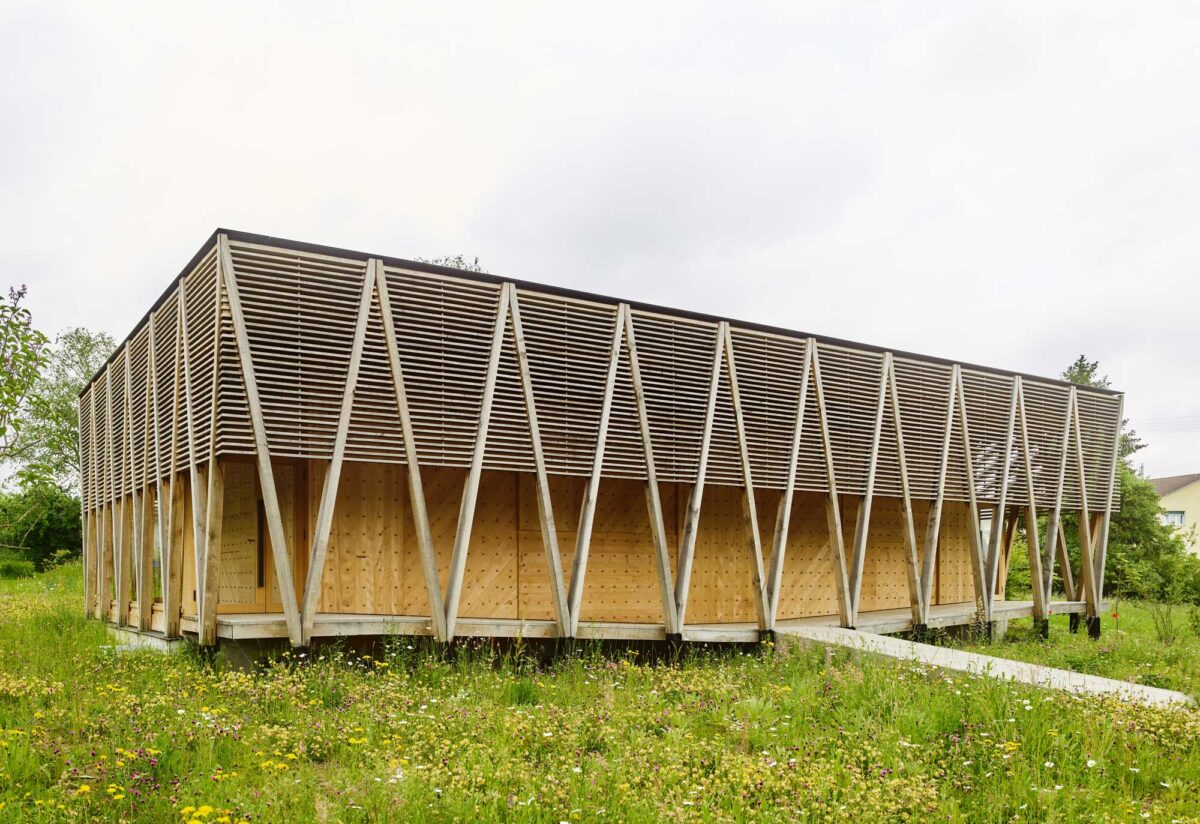
The newly constructed Art Pavilion
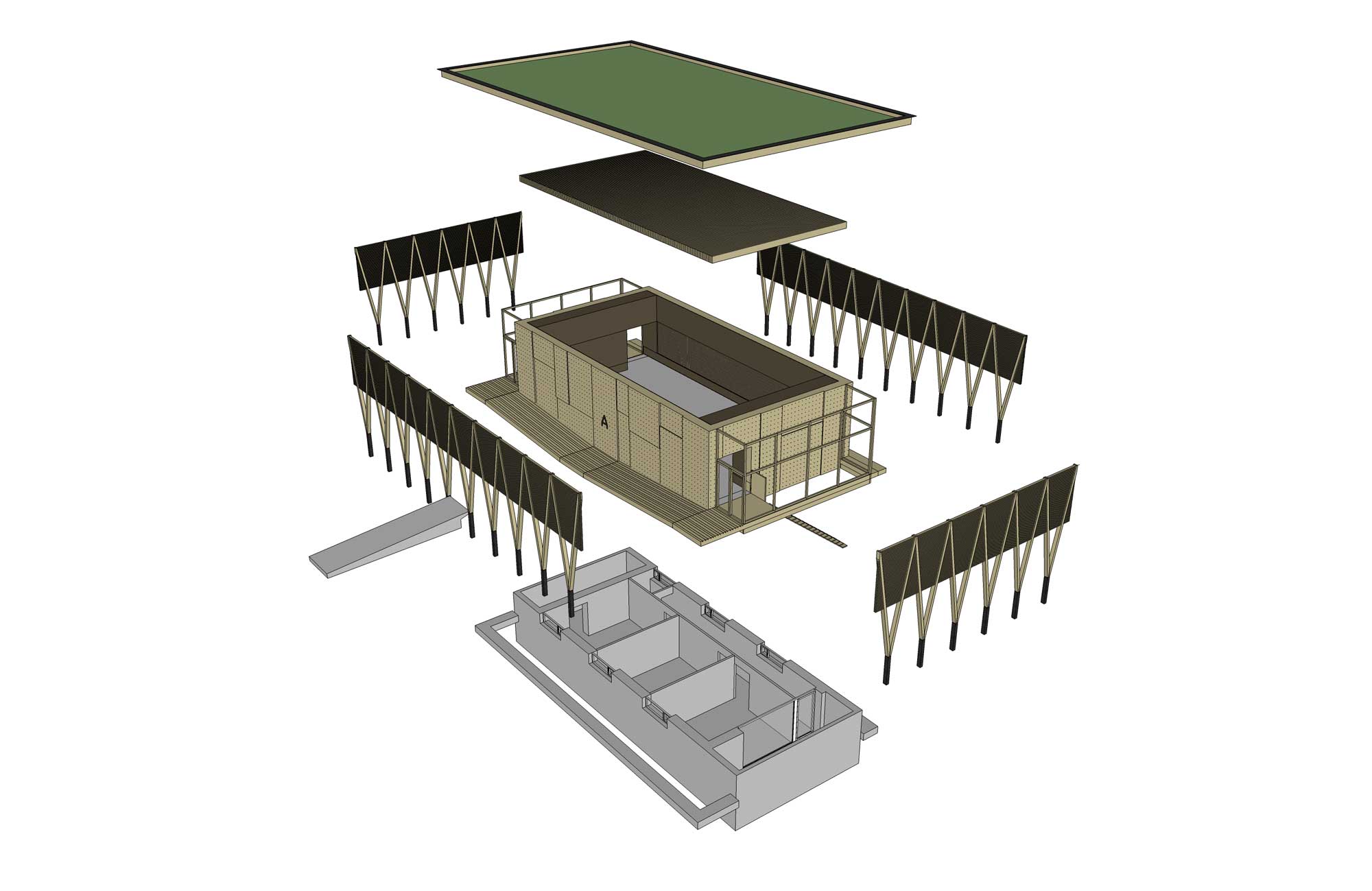
The art pavilion complements Albert Anker’s historic home and studio, reinterpreting the traditional storehouses—once used to house valuable artefacts—as contemporary architecture. A enclosed space for storing and displaying the artworks takes centre stage, offering a contemplative experience. With its compact form, the weather protection at the front and the solid timber cladding, the building maintains a constant climate and reduces energy consumption.
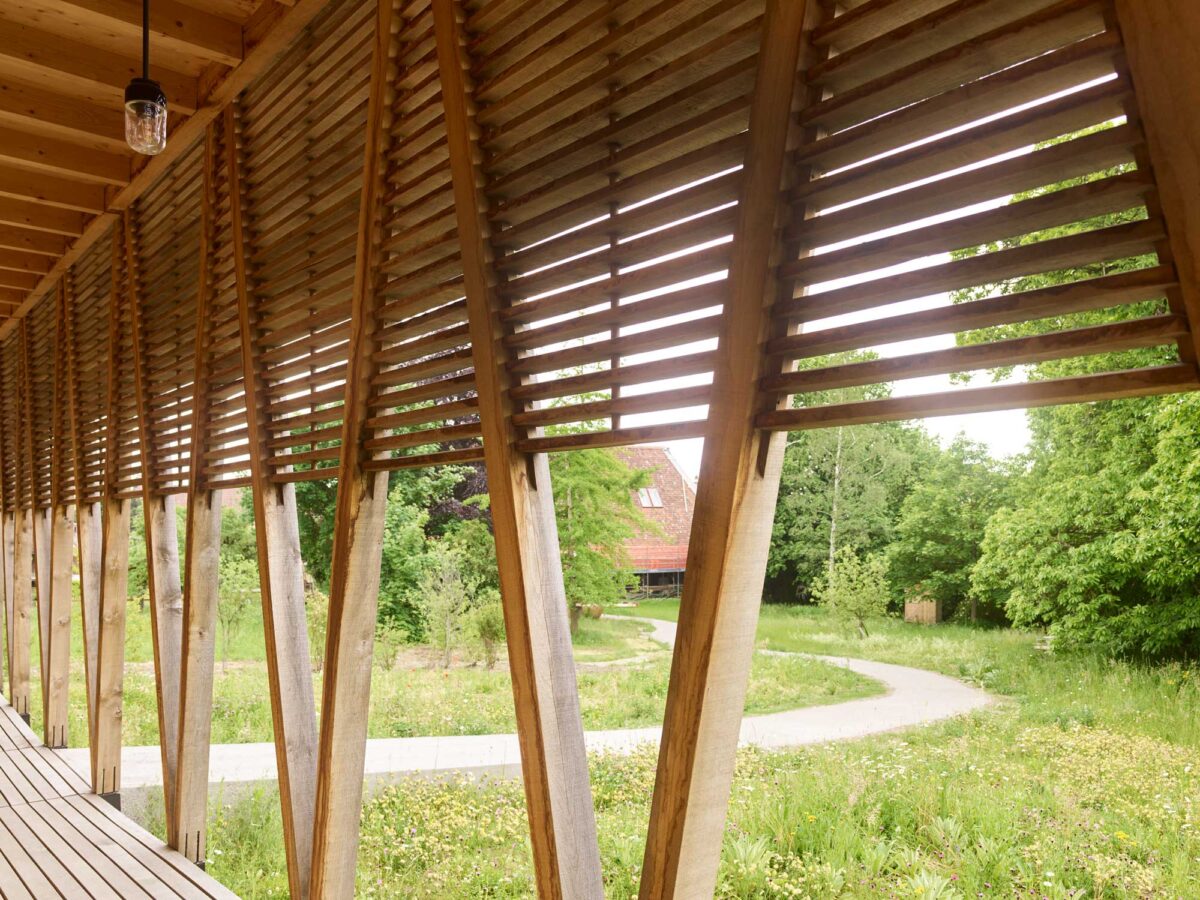
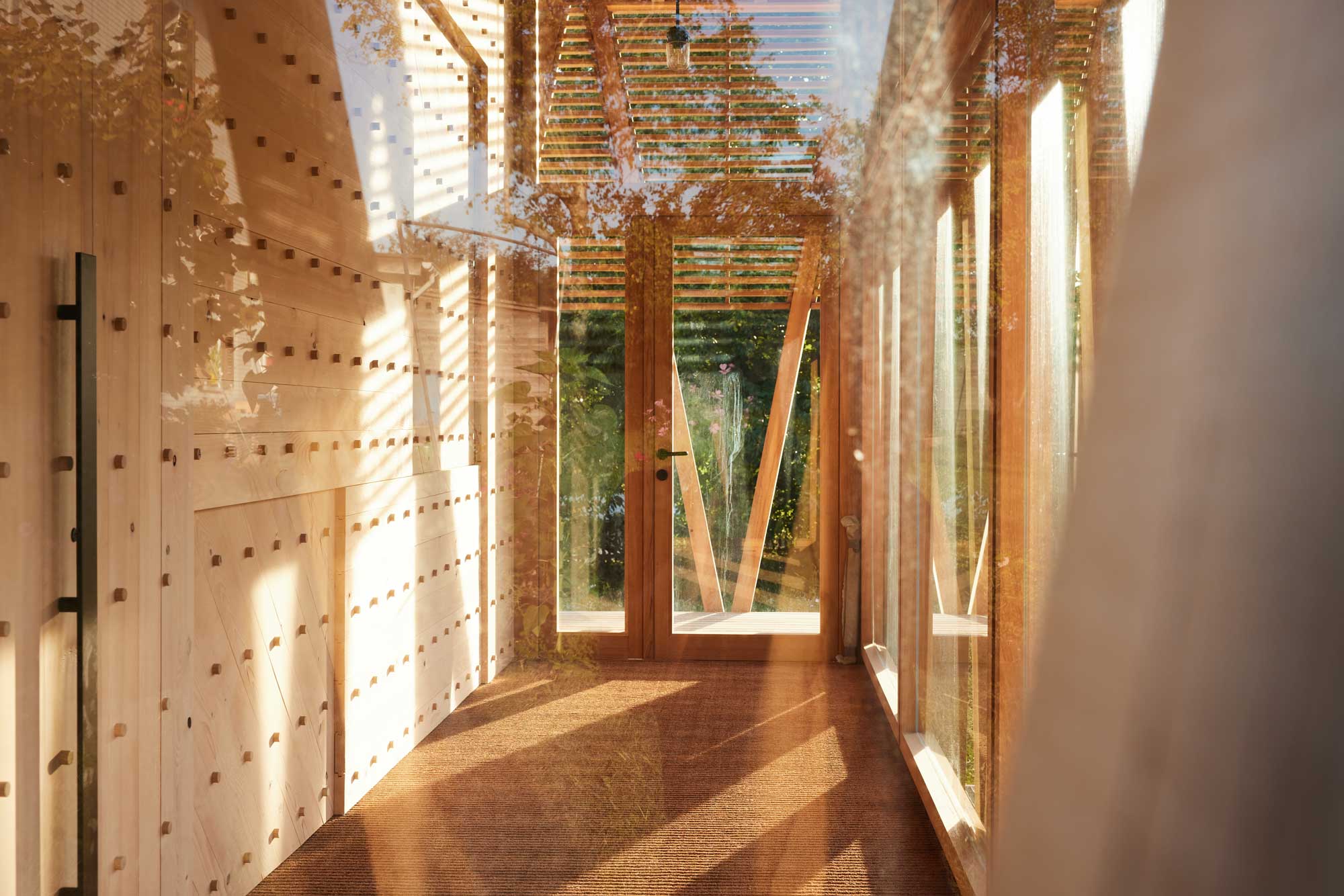
The design of the new building draws inspiration from traditional granaries. The central enclosed structure, the elevation of the storage space above ground level, the stone block in front of the building, the projecting canopy, the surrounding arbour and the uniform timber construction are key elements of the design. The sloping struts of the arbour tie the building together, lending a delicate lightness to the garden and creating a strong, iconic presence with high recognition value.
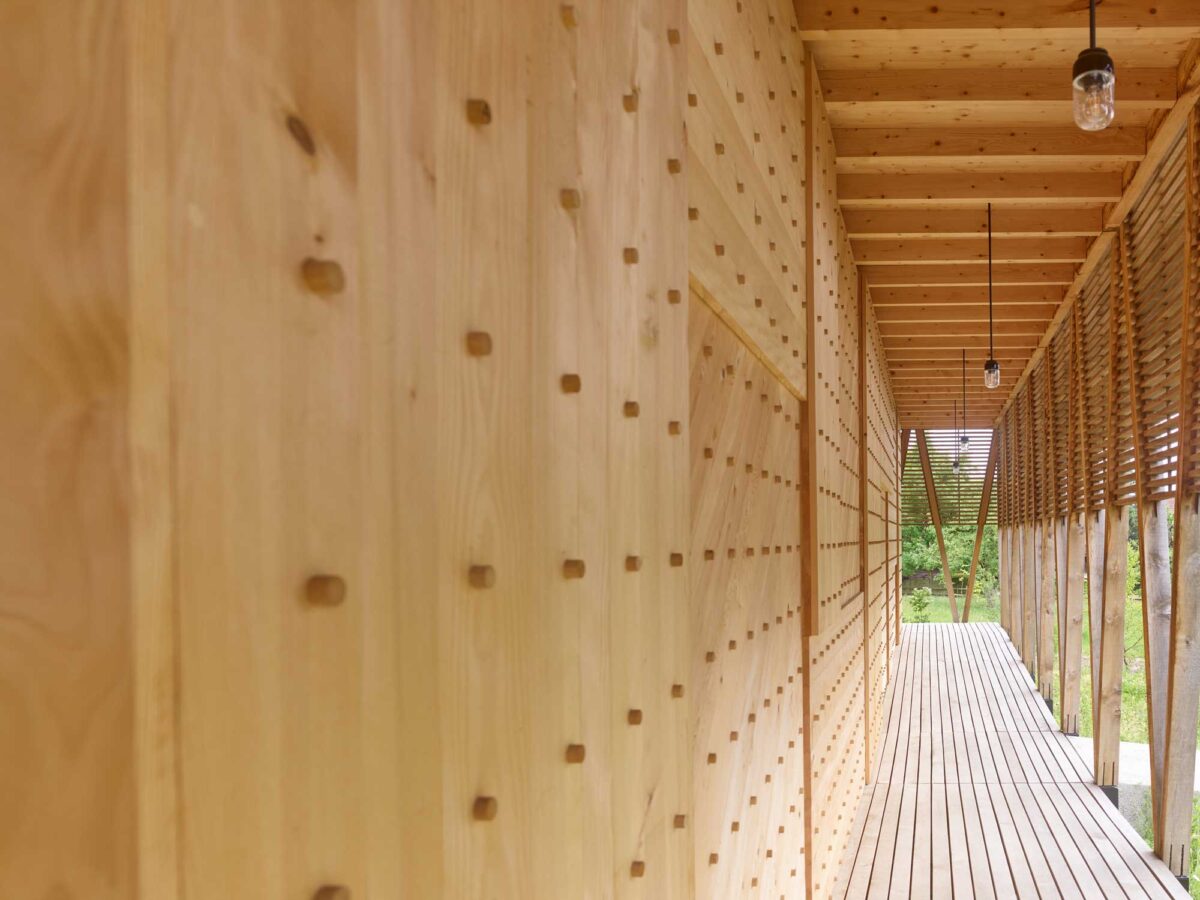
In a deliberately designed ‘architectural promenade’, visitors are guided through the reception rooms in the historic residence and the kitchen garden to the gently sloping north-eastern corner of the site, where the new building stands like a temple, nestled within a flower meadow. Via the stone ramp, visitors emerge from the meadow and enter the surrounding arbour, where the construction method of the solid timber façade is brought to life through the visible layering of the timber and the ornamental dowels.
Entering the central conservation and exhibition space is celebrated with a theatrical effect as the vault-like doors open. The subdued lighting, focused on the artworks, creates a mystical atmosphere and protects the light-sensitive works on paper. The space exudes tranquillity and time seems to stand still.


Stop a moment for Albert Anker’s art
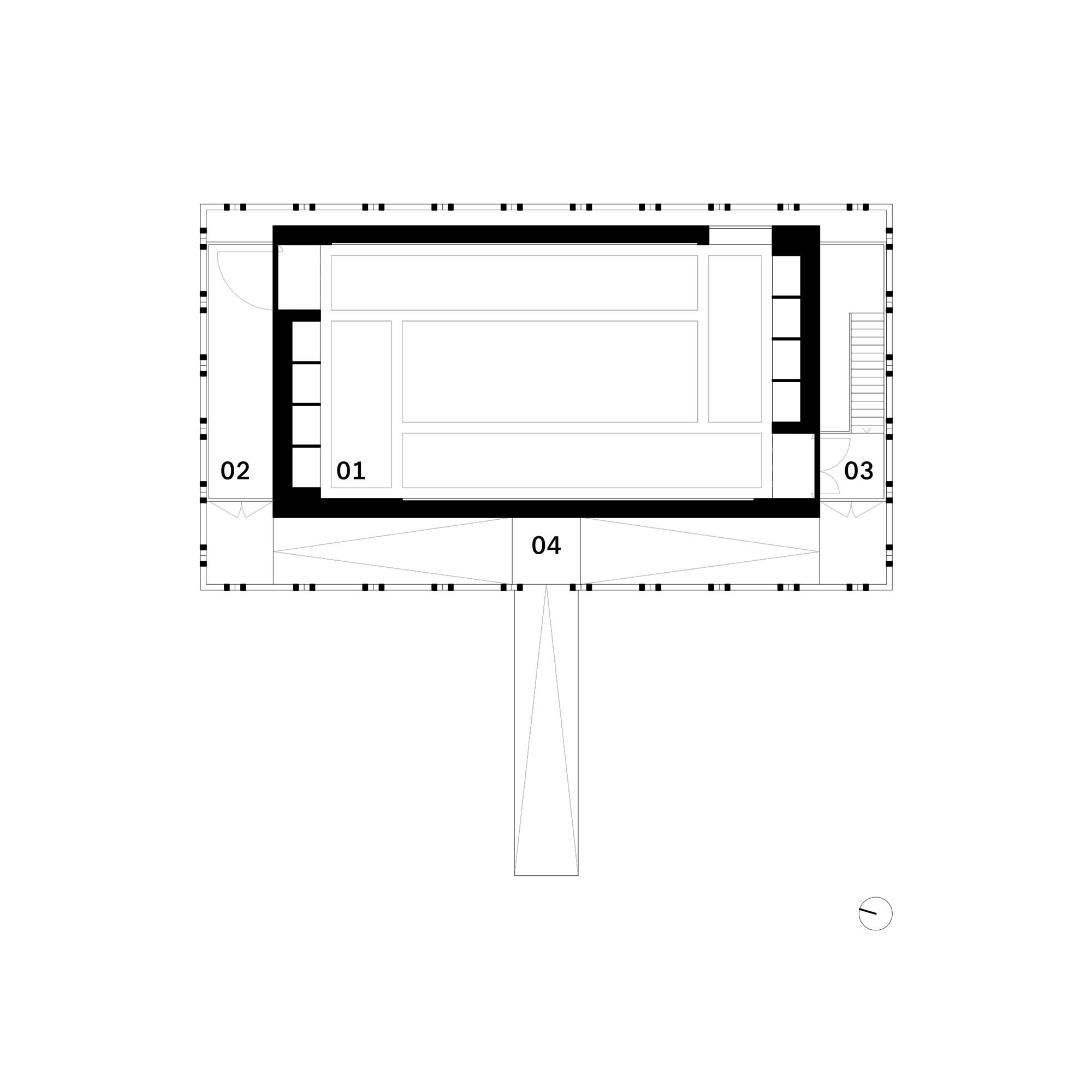
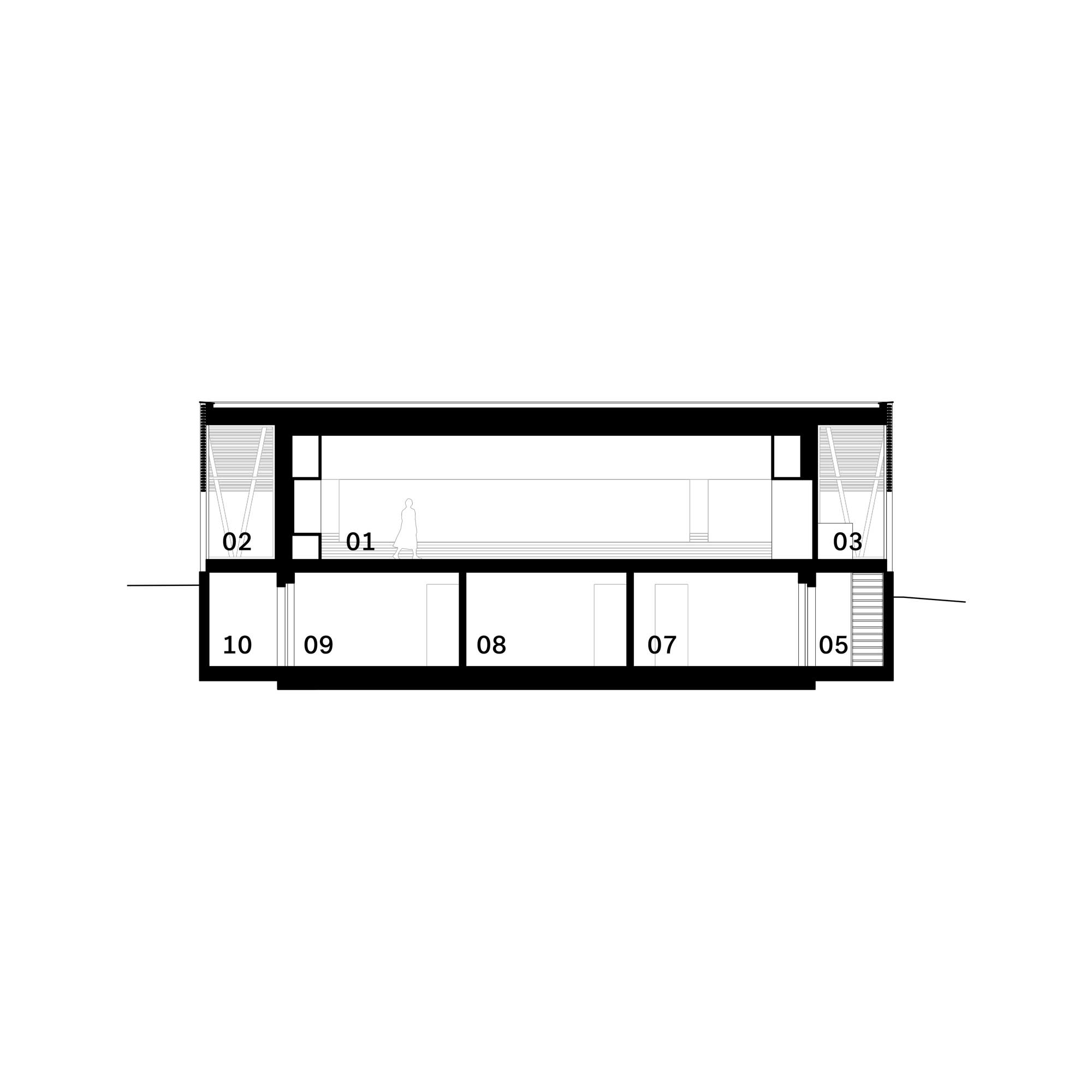
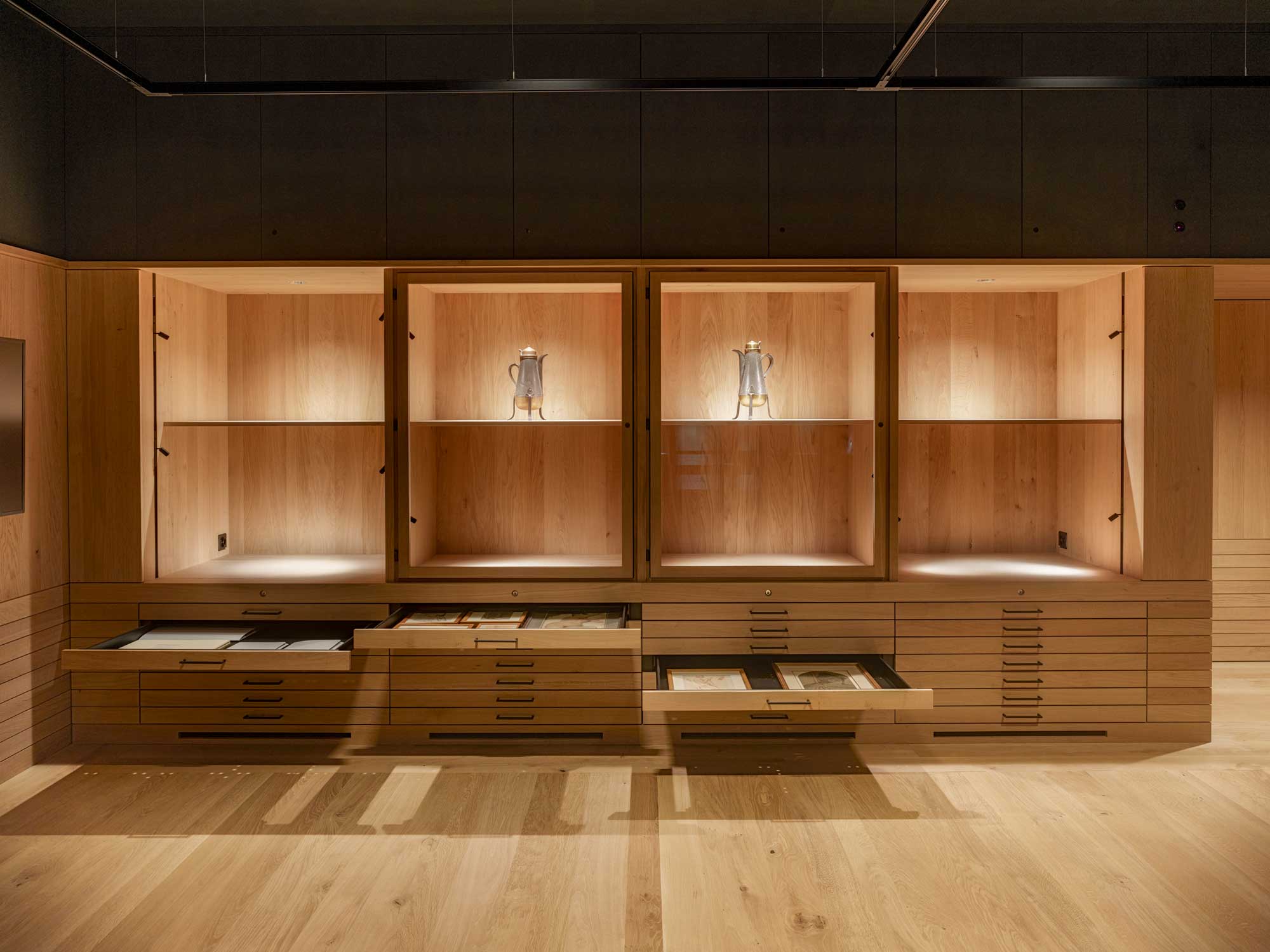
The conservation and exhibition space is a single, open, flexible room with a floor area of 100 m². Due to the sensitive nature of the items in storage, natural light had to be excluded. A single window provides a connection to the outside, but is closed off by a blackout blind depending on the current use of the interior. The room is characterised by large storage cabinets with 56 drawers for the paper works, 8 display niches and storage space in the wall units, as well as mesh walls serving as a simple and flexible hanging system for the pictures. Oak wood also dominates the interior, resulting in a high-quality finish. The materials, colour scheme and lighting create a dignified, tranquil space in which the artworks can unfold in all their splendour.


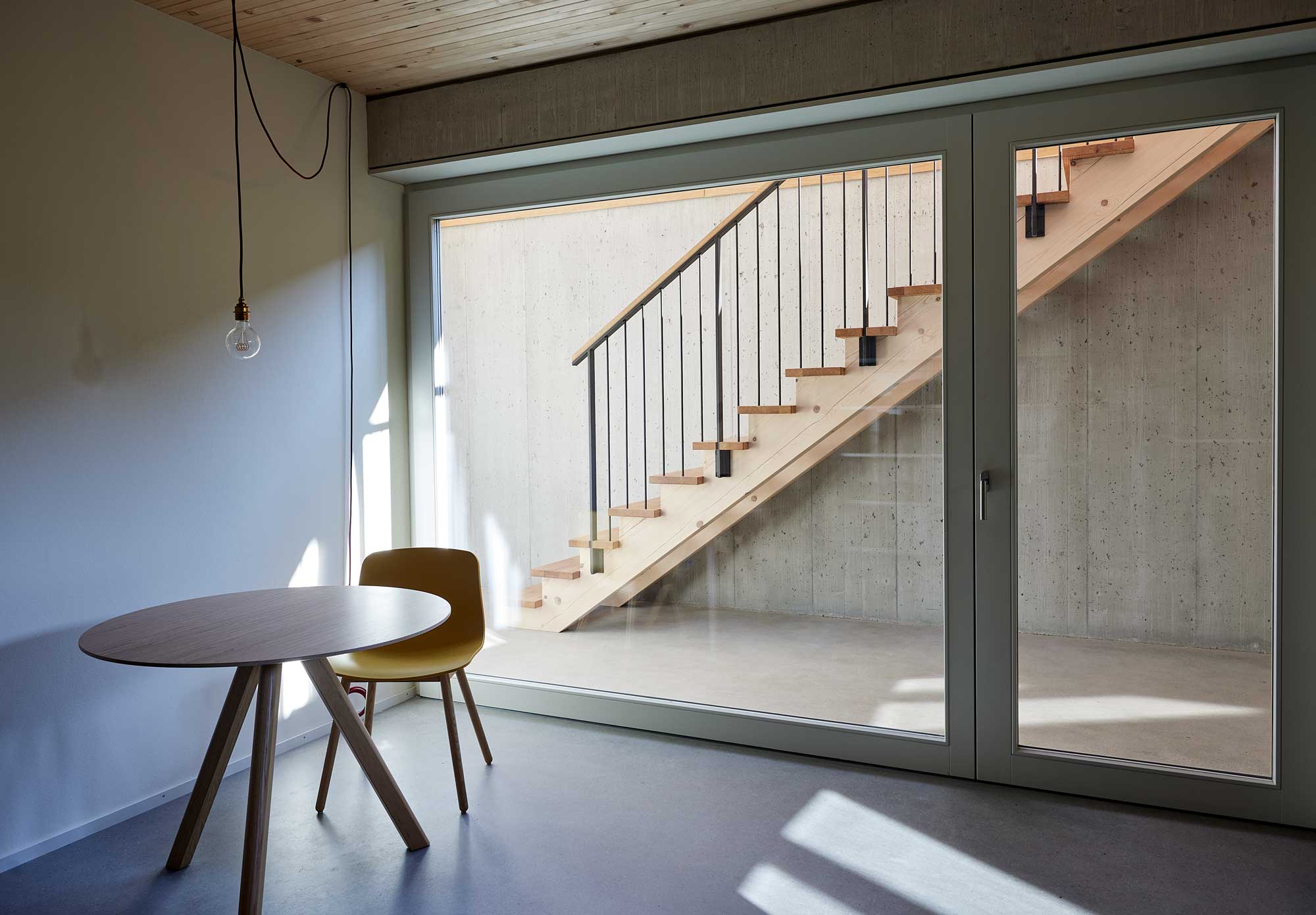
The art pavilion has a simple two-storey structure. The central storage and exhibition space is flanked by a wraparound pergola, which acts as a vestibule and protects the building’s core from the elements. The two porches on the short sides serve as climate buffers. The technical and service rooms are located in the basement.