From Albert Anker House to Centre Albert Anker
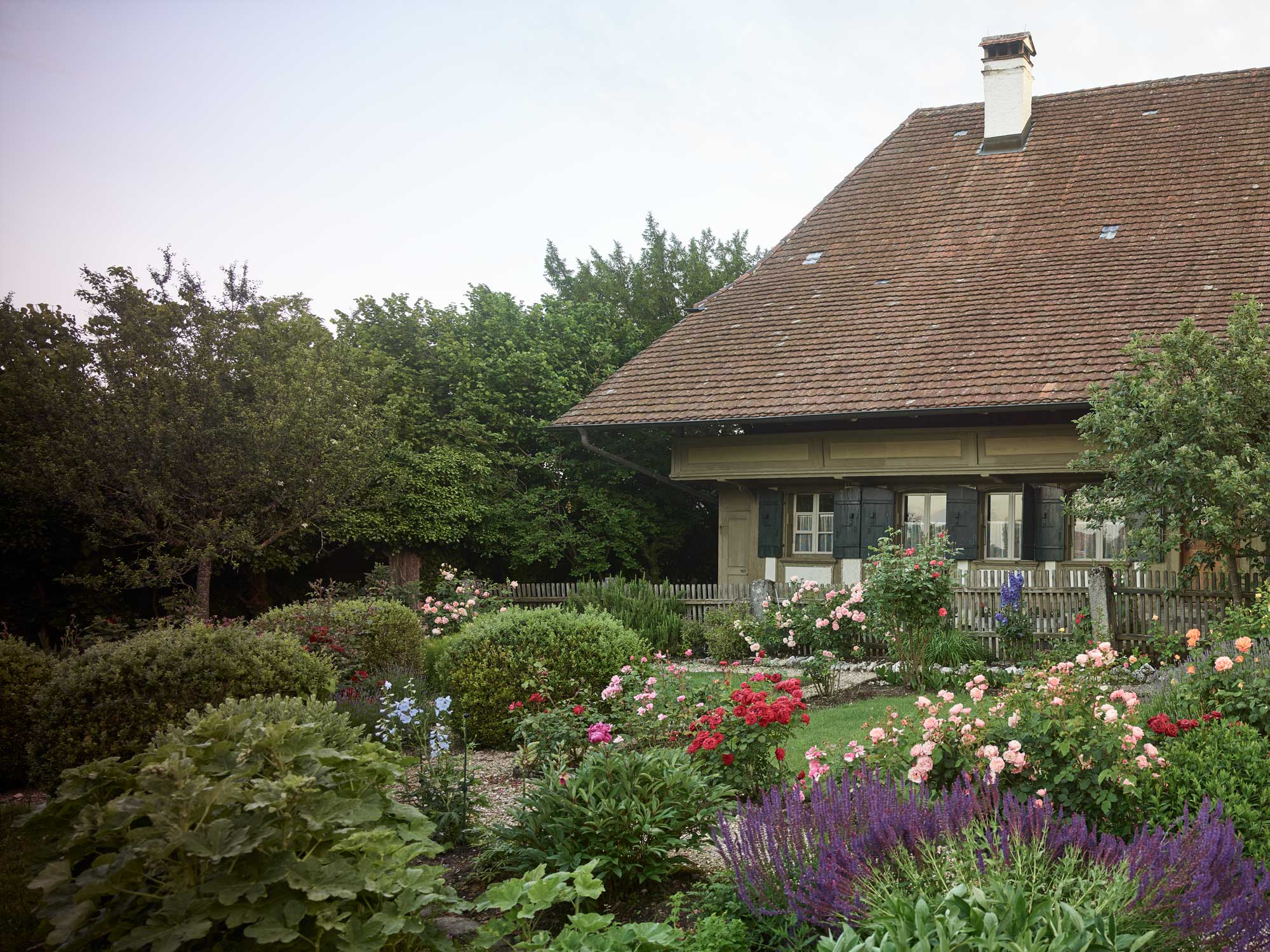
The large, imposing farmhouse at Müntschemiergasse 7 in Ins, where Albert Anker was born in 1831, was built by his grandfather in 1803. Both Albert Anker’s father and his grandfather worked as veterinary surgeons. Consequently, the house features an extensive farm section, including stables, huge haylofts, storerooms and vaulted cellars. In 1859, Albert Anker set up a large studio on the upper floor of his parents’ house, complete with two north-facing dormer windows. In 1860, he inherited his parents’ house. From 1891 onwards, Anker lived in Ins with his family all year round. The studio was enlarged and fitted with heating. The living area was also extended and refurbished to meet the standards of an upper-middle-class lifestyle.
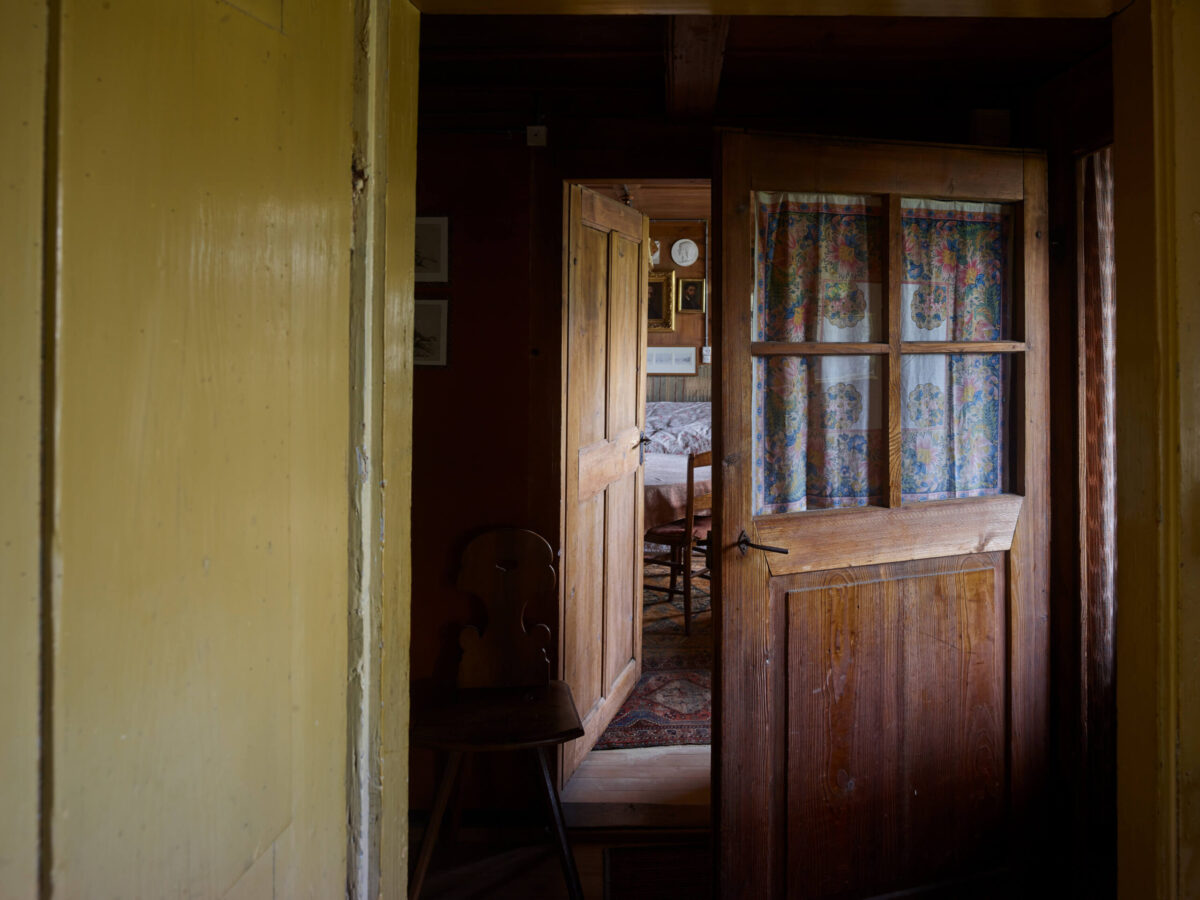
After Anker’s death in 1910, the house remained in his family’s possession. His descendants have preserved the house as a whole and the studio, with its complete furnishings, almost unchanged to the present day.
To preserve Albert Anker’s life’s work for many future generations and keep it accessible, the restoration and extension of the historic property were initiated by the Albert Anker-Haus Ins Foundation, which was established in 1994 by Matthias Brefin, the Bern Cantonal Heritage Preservation Office, the municipality of Ins and the Burgergemeinde of Bern.
On the occasion of the foundation’s establishment, Matthias and Rosette Brefin donated the entire estate within the house. In 2016, the property, together with all the land, was sold to the Albert Anker-Haus Ins Foundation.
The foundation set itself the goal of preserving the Anker House – which was included in the inventory of cultural assets of national importance by the Federal Council in 2009 as a single property – in its entirety as a unique historical document, whilst carefully adapting its infrastructure to modern museum standards.
This required a careful restoration of the residential building, in consultation with the heritage conservation authorities, and the conversion of the service wing into a visitor reception area featuring a permanent exhibition, a shop, a bistro and a workshop space.
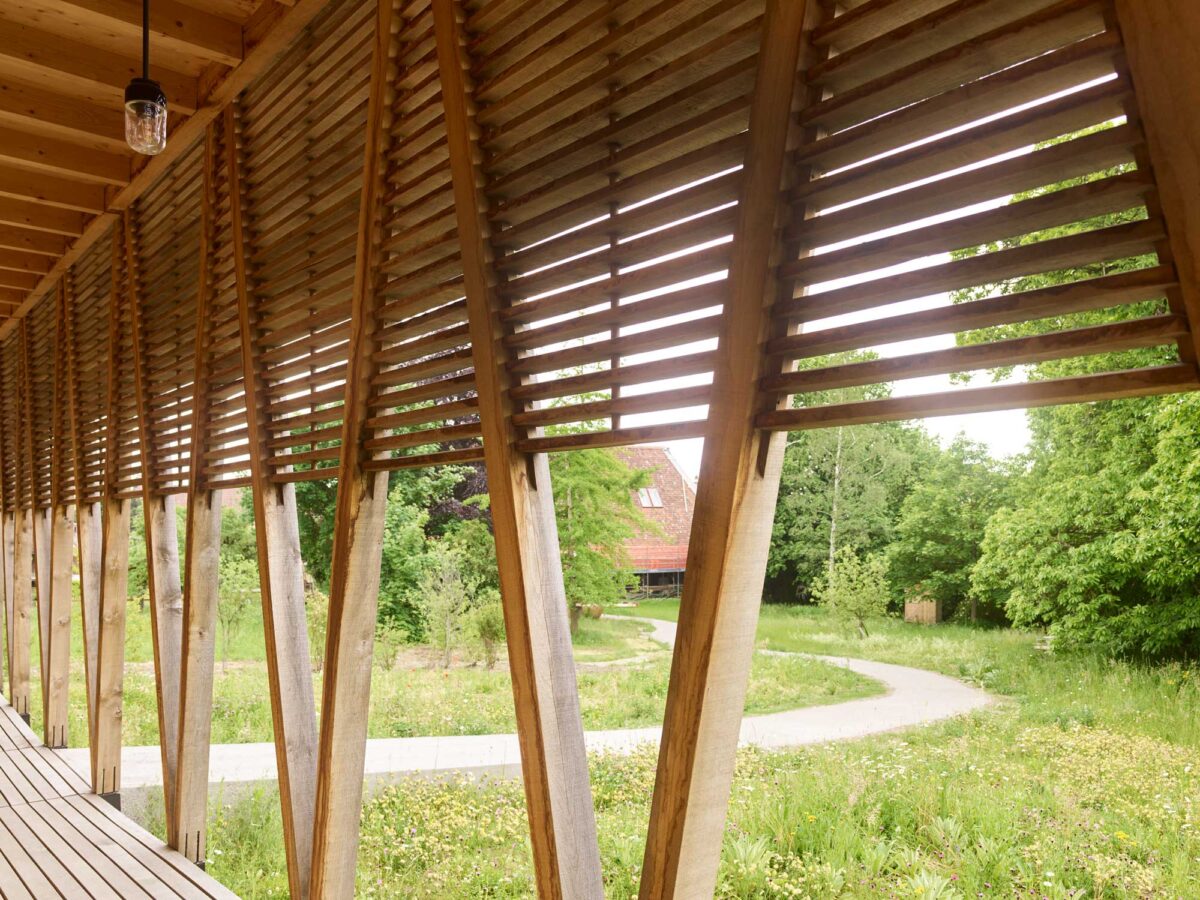
An important element of the Centre Albert Anker is the newly built art pavilion in the garden. It serves as the venue for the conservation of the Albert Anker-Haus Ins Foundation’s collection and, at the same time, as a venue for special exhibitions. The basement houses work and technical rooms.
The architecture of the art pavilion was designed by Marcel Hegg, an architect who grew up in Ins and now lives in Biel. Thanks to his connection to Albert Anker, he has put his heart and soul into developing the project from the outset, working closely with the foundation. His many years of experience with architectural projects in the arts and culture sector, as well as with listed buildings, laid the foundation for the unique art pavilion.
Phases in the construction of the Art Pavilion:
Preliminary project: approved at the close of 2018
Planning permission: end of 2020
Start of the construction work: May 2021
Laying the foundation stone: June 2021
Topping-out ceremony: October 2021
Opening of the Art Pavilion: June 2022
Phases in modifications/renovation of the living quarters and artist’s studio:
Modifications and renovation begin: September 2022
Dismantling complete: January 2023
Foundations fortified: by April 2023
Roof renovation: November 2023 to August 2024
Structure completed: November 2023
Rammed earth floor installed in the reception area: September 2023
Interior complete: April 2024
Modifications/renovation of the Anker house finished: April 2024
Visitor facilities and service area:
Visitors’ reception area, shop, bistro, lift, sanitary facilities, work on the surroundings: by May 2024
Concept for the permanent exhibition: March to December 2023
Setting up the permanent exhibition: January to May 2024
Setting up the special exhibition: March to May 2024
Open to the public: from June 7, 2024