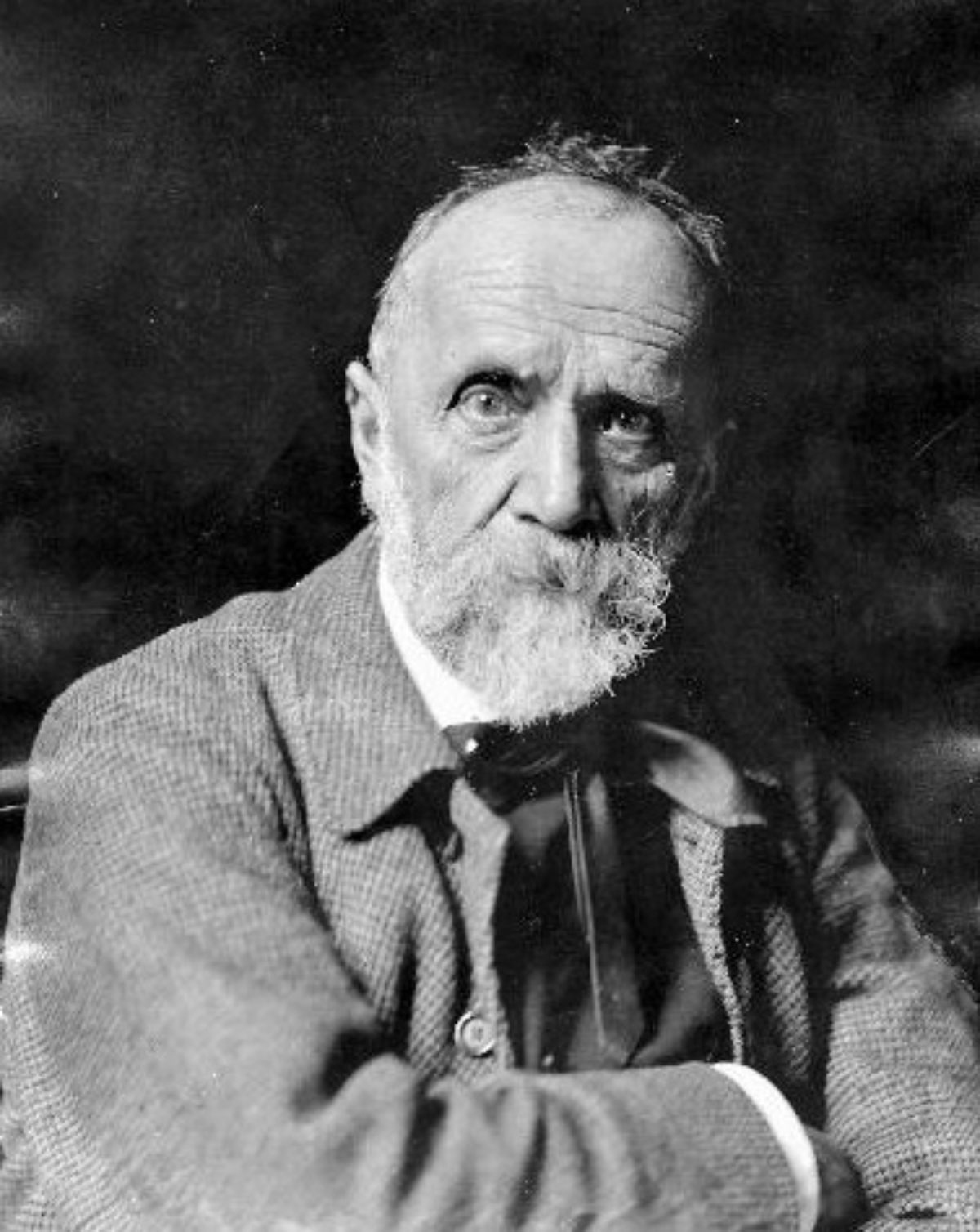
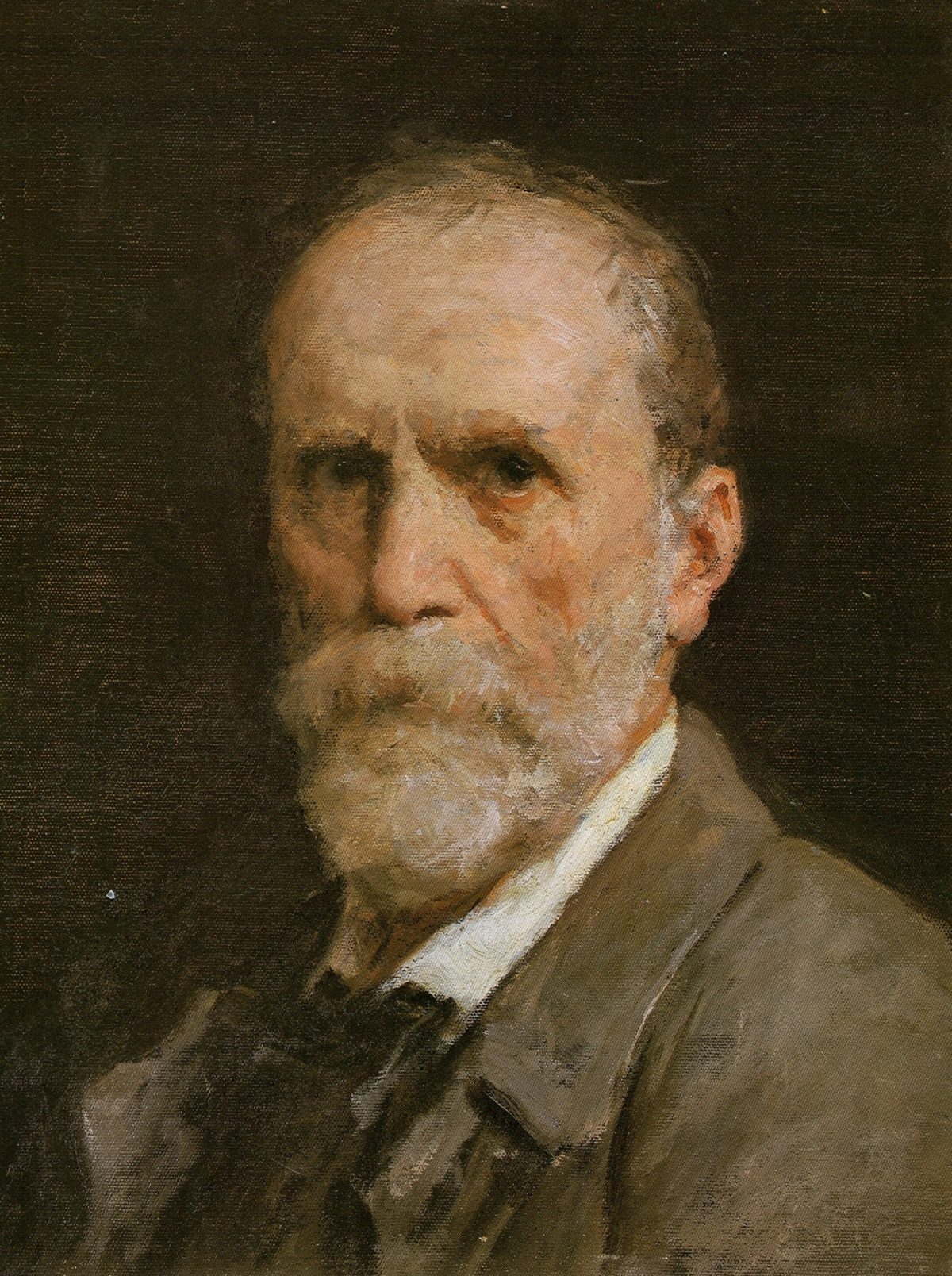
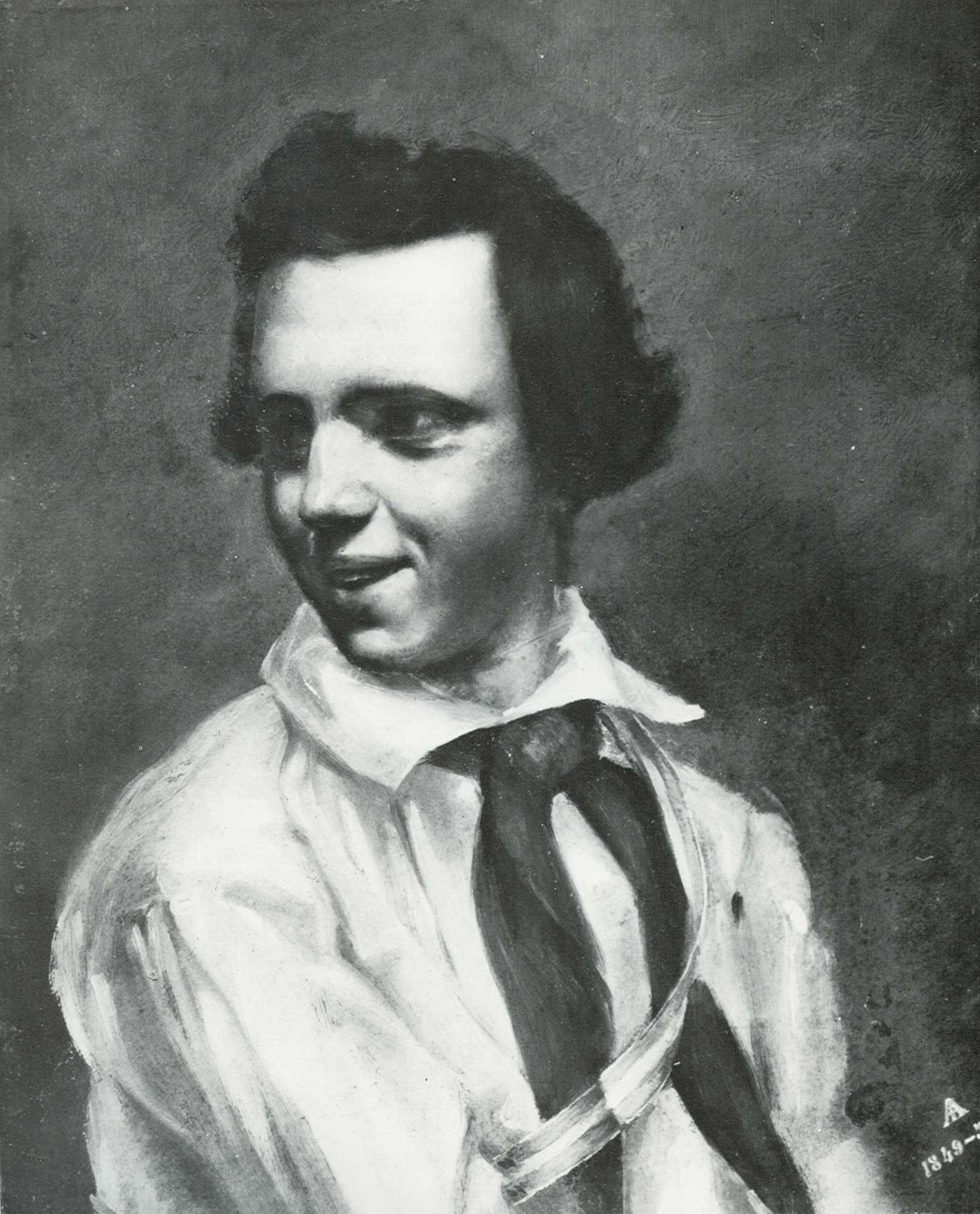
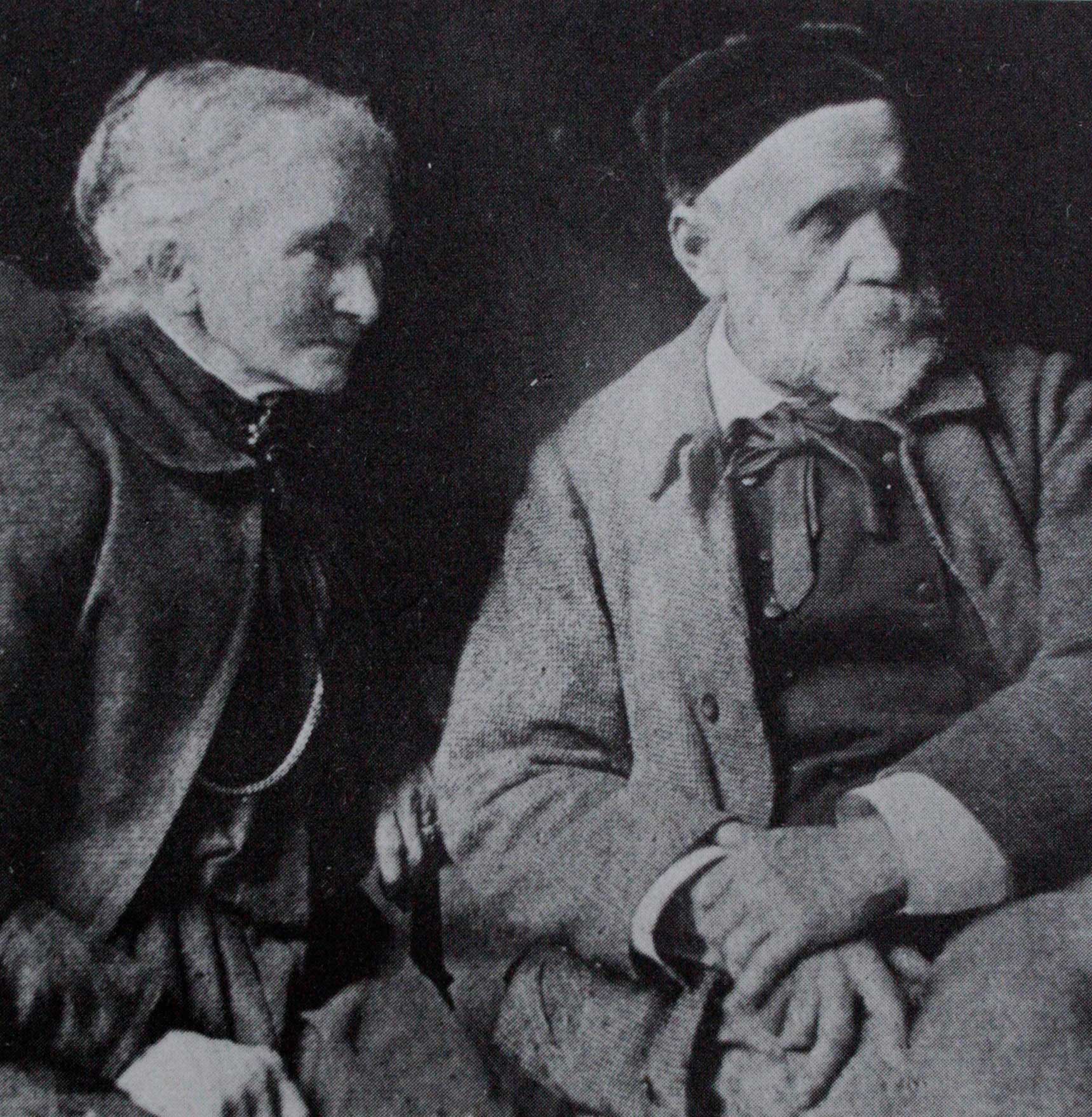
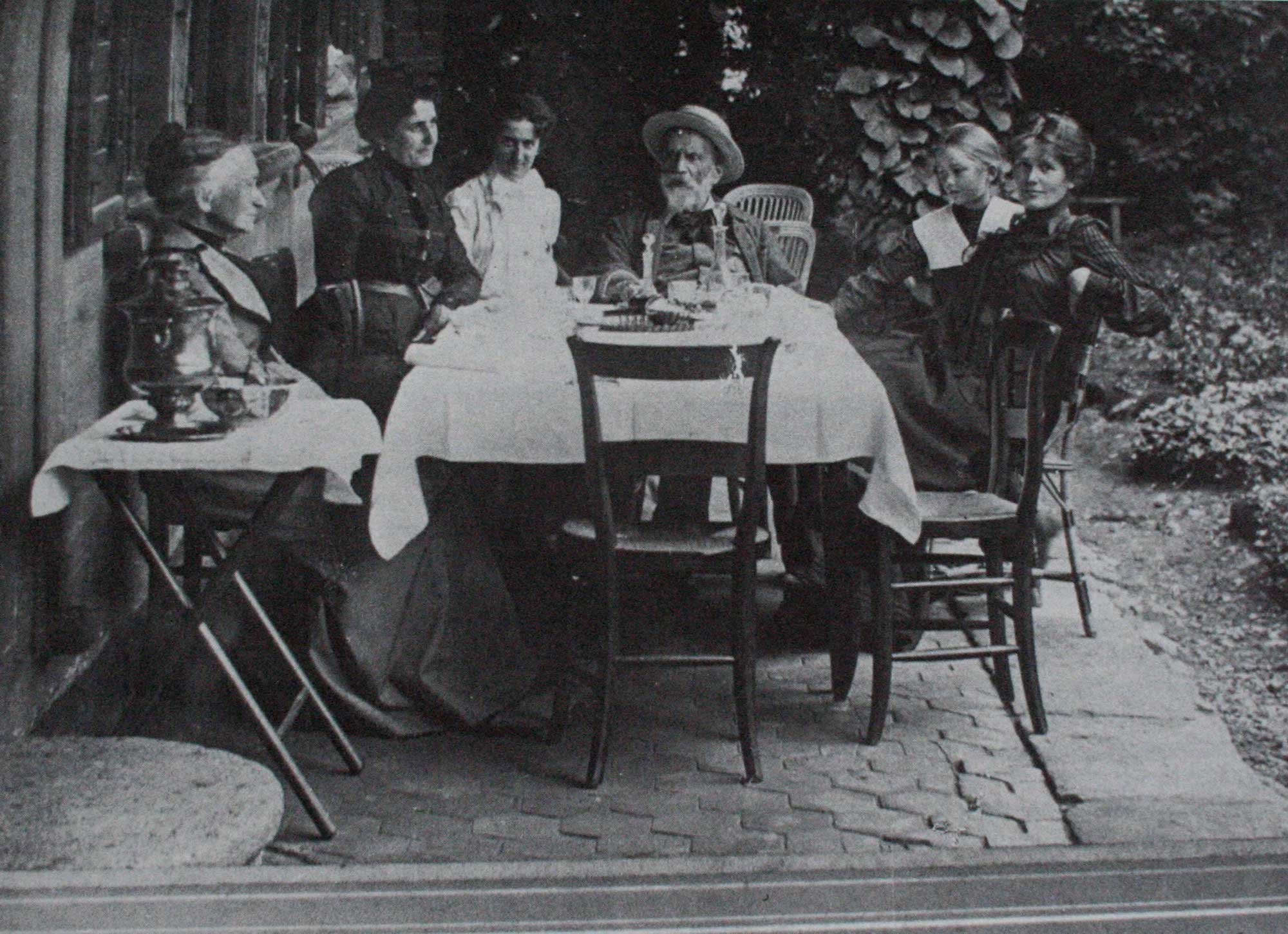
Albert Anker (1831–1910) is not merely one of the most popular Swiss painters of the 19th century. His interest in the ‘soul’ of his subjects sets him apart from other realists and portrait painters of his time. His personality combined many facets: sensitivity, a humanistic worldview and his responsibilities as a family man. Rooted in German and French culture, Anker lived and worked in Paris and Ins, in the Bernese Seeland. Alongside his well-known works, he also created very personal pieces intended solely for his closest family and friends. Countless surviving photographs, letters and drawings bear witness to a man who thought and acted in an extremely cosmopolitan manner for his time.
Anker was born in Ins in 1831. In Paris, he completed a classical training as a painter under the tutelage of the Vaudois artist Charles Gleyre (1806–1874). Stylistically, he was initially influenced by the classicism of Jean-Auguste-Dominique Ingres.
As an educated man who read books in five languages, Anker engaged with the social, political, societal and educational issues of his time. In his paintings, he does not condemn, but rather illustrates peasant and bourgeois values in a realistic style. His newspaper readers, as well as his pupils, depict the emancipation of the rural population into well-informed and thus responsible citizens. Anker produced the finest portraits of children that 19th-century Realism has produced across Europe.
Anker describes his interest in, but also his reservations about, technology and the emerging industrial age in his extensive correspondence with his friends and companions. In his day, Anker was an internationally connected and successful artist, as much at home in Paris as he was in Switzerland. In Paris, he maintained a studio for decades and regularly participated in the Salon, where he was just as successful as in the biennial exhibitions in Switzerland. Through Adolphe Goupil’s gallery in Paris, his works found their way into private collections across Europe. Anker had been spending his winters regularly in Paris since 1854, and from 1865 onwards, he did so together with his family. The family spent the summer months in Ins. In his home region, he gained great renown for his illustrations of Gotthelf’s works. He held public office at the municipal, cantonal and, ultimately, federal levels. He was a member of the school board, the church council and the men’s choir in Ins; as a member of the Grand Council, he championed the construction of the Bern Art Museum and monitored the Jura River regulation project as well as economic life in the young federal state founded in 1848. As a member of the Federal Art Commission and the Gottfried Keller Foundation, he championed the promotion of active artists and the development of public art collections.
Letter from 18-year-old Albert Anker to his school friend, the painter Auguste Bachelin,
dated 9 June 1849 on the subject of art:
‘What is art? First and foremost, art does not consist in imitation, but in two things: firstly, one must form an ideal in one’s imagination; secondly, one must present this ideal to the eyes of one’s fellow human beings, giving it a form that is accessible to our sight and hearing…
I believe that the beauty which should guide an artist in his work and which forms the basis of all artistic creation lies in the harmony between the artist’s ideal and all the external means available to him for its representation…
The artist must learn to give his ideal an external form; to this end, one goes above all to studios and museums to benefit from the experiences of others. Just as the poet learns his language and the metre of his verses in order to create his work, so the painter, in order to realise his ideal, must learn how to wield the brush, how to apply colours; he must be able to draw…